

A rope ladder looks simple: two long ropes with rungs strung between them. But once you start shopping, you hit questions fast. Rope or chain rungs? Wood or plastic? What length actually works for your tree, playset, or climbing dome? And how much weight can it hold before you worry about a rung snapping mid-climb?
This guide walks through what a rope ladder actually is, the main types you'll find on the market, and how to pick one that fits your space and your kids' ages. We'll cover the difference between a basic rope ladder climbing toy and a heavy duty rope ladder built for real load-bearing use, plus how sizing works if you need a long rope ladder or something closer to a standard rope ladder 20 ft length for a tall tree or high platform.
We'll also talk pricing, since rope ladder price ranges swing widely depending on materials and rung type, and that gap usually tells you something about durability. By the end, you'll know exactly what to look for, whether you're outfitting a backyard climbing arch or adding a ladder to an existing play structure.

Why a rope ladder benefits active play and development
Climbing a rope ladder demands something a flat staircase never does: constant recalibration. Every rung shifts slightly under your child's weight, so their brain and body have to negotiate balance in real time. This is exactly the kind of unstructured, physical problem-solving that Montessori-inspired play prioritizes over passive entertainment. Kids aren't following a fixed pattern of steps; they're reading the ladder and adjusting on the fly.
Building strength and coordination
Gripping rope rungs works the hands and forearms in ways that plastic playground equipment rarely does, building grip strength that carries over into everything from monkey bars to handwriting control. Climbing also recruits the core and legs simultaneously, since a swinging ladder won't hold still the way a wooden Pikler triangle rung does. Kids who practice rope ladder climbing regularly tend to show noticeably better balance and body awareness within weeks, according to parents and occupational therapists who use climbing equipment in sensory integration work.
A rope ladder turns every climb into a small balance lesson, not just a repeated motion.

Encouraging confidence and independent risk assessment
Only your child feels the ladder move underneath them, so they're the one deciding how fast to go, where to place their feet, and when to pause. That self-directed pacing builds real confidence rather than confidence handed to them by an adult's reassurance. Letting kids assess their own risk on safe, well-installed equipment is a core Montessori principle, and a rope ladder is one of the simplest tools for practicing it.
Working across ages and skill levels
Toddlers might start on a short, angled version fixed to a climbing arch, while older kids graduate to a vertical long rope ladder hung from a tree branch or platform. Because difficulty scales naturally with height, angle, and rung spacing, one ladder style can serve a family for years without becoming boring or too easy.
How to choose the right rope ladder for your needs
Picking the right rope ladder comes down to three questions: where will it hang, who will climb it, and how much weight does it need to hold. Get those answers first, then match materials and length to them instead of just grabbing whatever looks sturdy in a product photo.

Match rung material to how it will be used
Wood rungs feel more natural underfoot and match Montessori-style furniture, while rope-only rungs pack down smaller and flex more, which suits younger climbers who need forgiving equipment. A heavy duty rope ladder with reinforced wood rungs and thick marine-grade rope is worth the extra cost if multiple kids or adults will use it regularly.
Choose rung material based on who's actually climbing, not just what looks nicest hanging from a tree.
Get the length and weight capacity right
Measure your drop height before ordering. A rope ladder 20 ft length suits tall trees or two-story platforms, while anything under 10 feet fits most climbing arches and play towers.
| Use case | Typical length | Weight capacity to look for |
|---|---|---|
| Climbing arch/dome | 4-6 ft | 100+ lbs |
| Tree swing platform | 8-12 ft | 150+ lbs |
| Tall tree/loft | 15-20 ft | 200+ lbs |
How to make a rope ladder at home
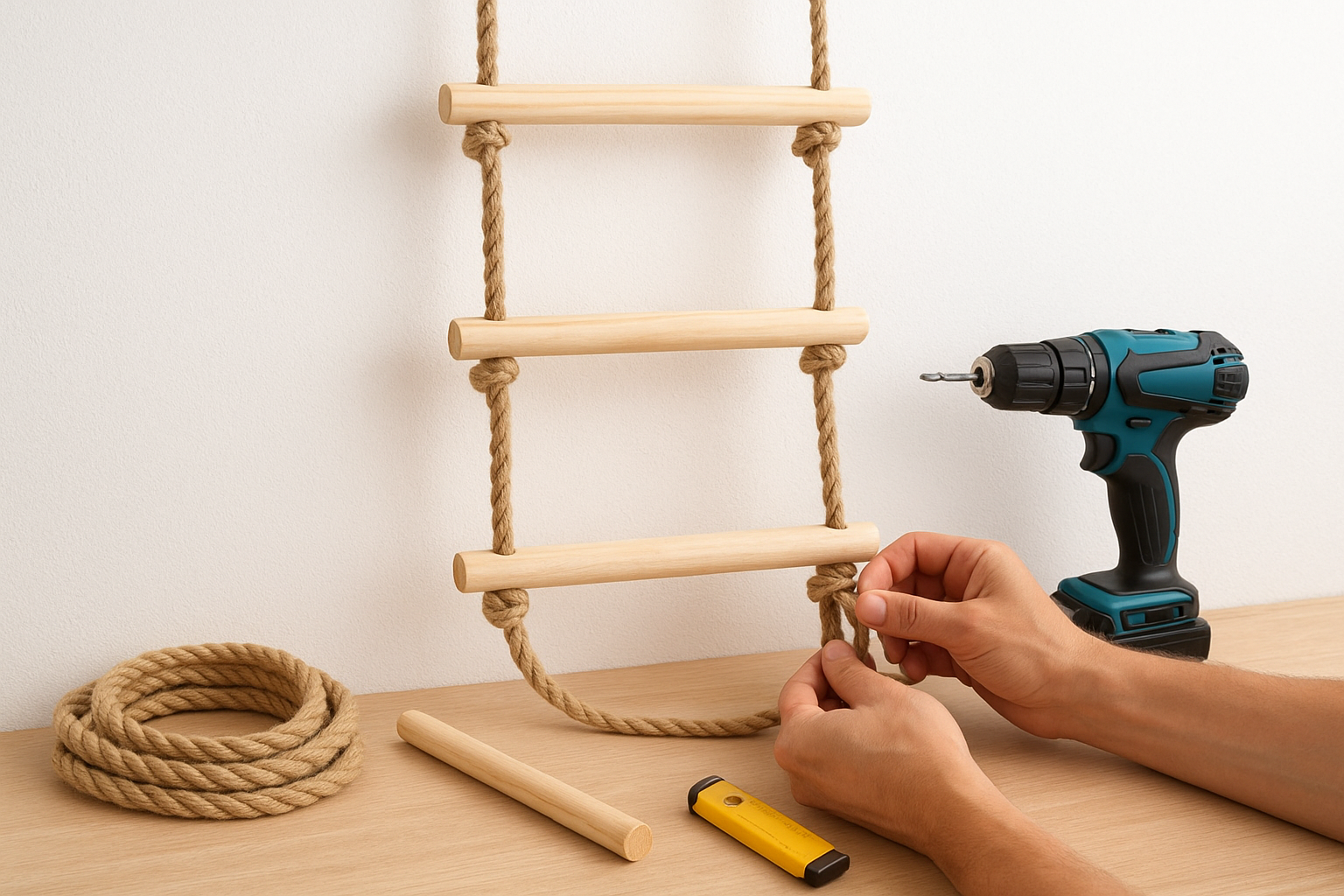
Building your own rope ladder works fine for a light, occasional-use project, but treat it as a weekend craft, not a substitute for climbing equipment that needs to hold real weight day after day. If you're outfitting a serious climbing structure, a manufactured heavy duty rope ladder with tested weight ratings is the safer call.
Materials and basic steps
Gather these before you start:
- 2 lengths of nylon or manila rope (diameter 3/4 in or thicker)
- Wooden dowels or rungs, cut to 12-16 in
- Drill with a bit matching your dowel diameter
- Measuring tape and marker
- Wood glue or heavy-duty knots (double fisherman's knot)
Drill through each dowel end, thread the rope through, and space rungs 10-12 inches apart, tying secure knots on both sides of every rung so weight distributes evenly.
A homemade ladder is only as strong as its weakest knot, so test every rung before a child ever steps on it.
When DIY makes sense
A homemade version suits low platforms, playhouse lofts, or short indoor projects where a fall risk stays minimal. For taller installs, buy one built and rated for the job.
How to install and use a rope ladder safely
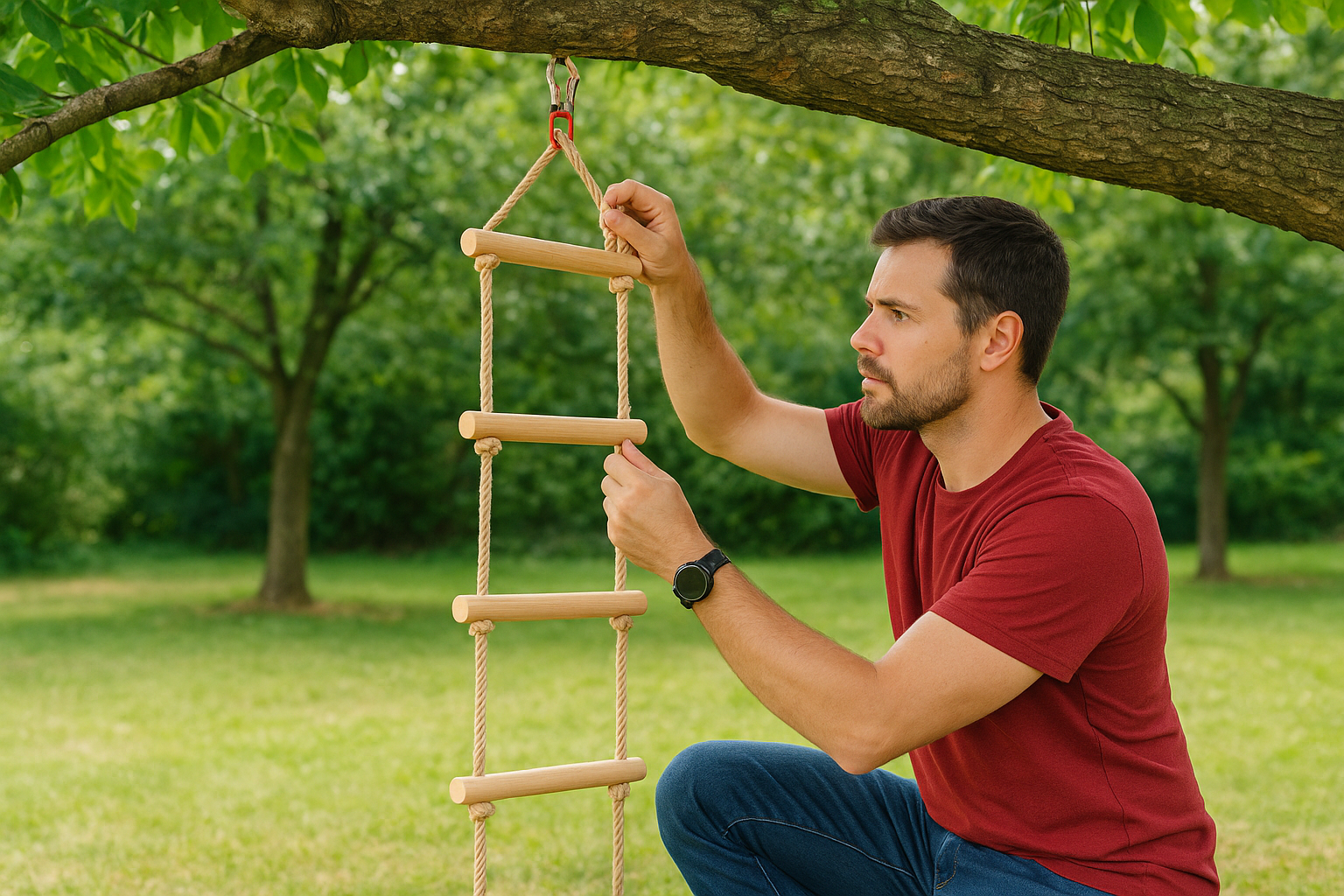
Installing a rope ladder correctly matters more than picking the fanciest model. A poorly anchored ladder turns a fun climb into a real fall hazard, so check every attachment point before letting kids near it.
Anchoring and ground prep
Secure the top anchor to a load-rated branch, beam, or climbing frame hook, never to a single screw eye in drywall or thin plywood. Place a safety surface like rubber mulch, mats, or thick grass underneath, since even short falls happen during learning. Check knots and carabiners monthly, tightening anything that's loosened from repeated use.
The anchor point matters more than the rope itself, since a strong ladder still fails if it's tied to something weak.
Supervision and age-appropriate use
Kids under 3 should always climb with an adult spotting nearby, since balance and grip strength are still developing. Older kids can climb independently once they've shown they can grip rungs firmly and dismount safely.
- Check weight limits before letting multiple kids climb together
- Keep the climbing area clear of hard toys or furniture below
- Replace rope showing fraying, mildew, or UV damage
Follow general playground safety guidance from sources like the Consumer Product Safety Commission for outdoor equipment.
What affects rope ladder price and where to buy one
Rope ladder price swings from under €20 for a basic play version to well over €150 for a heavy duty rope ladder rated for adult weight. That gap comes down to rope thickness, rung material, and how the ladder is finished at the anchor points, not marketing.
What drives the cost
Marine-grade rope, hardwood rungs, and reinforced stitching all add cost but also add years of outdoor use. Thin nylon rope with plastic rungs looks similar in photos but wears out fast once it sits outside through a full season of sun and rain.
| Price range | What you typically get |
|---|---|
| €15-€40 | Light-duty, thin rope, indoor or occasional use |
| €40-€90 | Wood rungs, mid-weight rope, backyard-ready |
| €90-€200+ | Heavy duty rope ladder, marine rope, tested weight rating |
Cheap rope ladders usually fail at the rungs first, so that's where your money should go.

Where to buy
Buy from sellers who publish weight ratings and material specs, not just dimensions. Brands that specialize in Montessori-style climbing gear, including ladders paired with arches or domes, tend to test for real outdoor durability rather than one-time indoor play.
Finding the right fit for your family
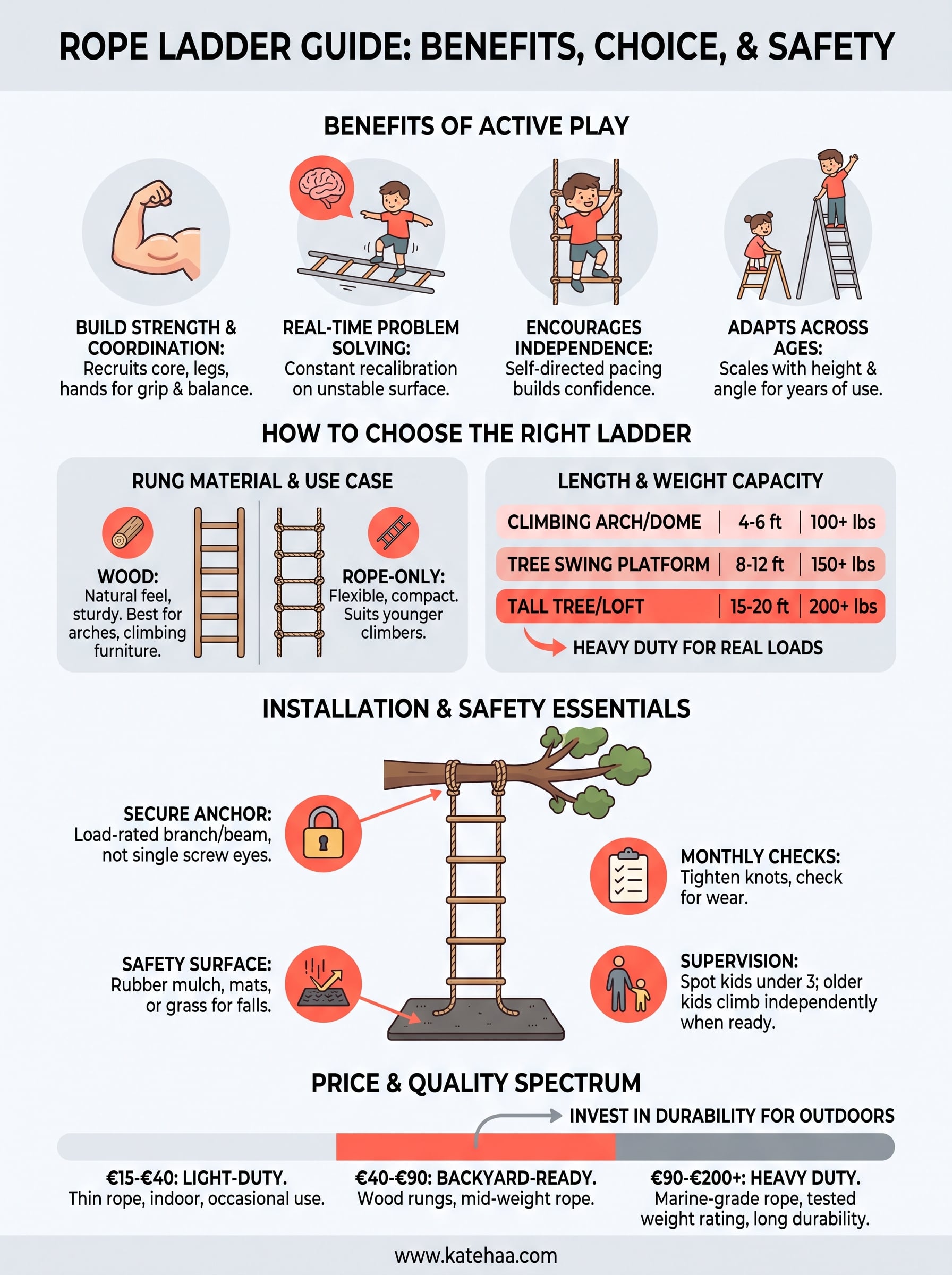
A good rope ladder comes down to matching length, rung material, and weight rating to how your kids actually play, not to whatever looks best in a listing photo. Short arches need light, forgiving rungs. Tall trees and platforms need a heavy duty rope ladder built with marine rope and real weight testing behind it. Get those basics right and the ladder earns its spot in the backyard for years, not just one summer.
Getting the right setup rewards you with kids who climb confidently, build grip and balance without even noticing they're training it, and come back to the same ladder at 4 years old and again at 10. That's the whole point of choosing well instead of choosing fast.
If you want a ladder built to pair with a Montessori-style climbing arch or dome rather than bolted on as an afterthought, browse KateHaa's climbing toys and arches for options designed to grow with your family.